
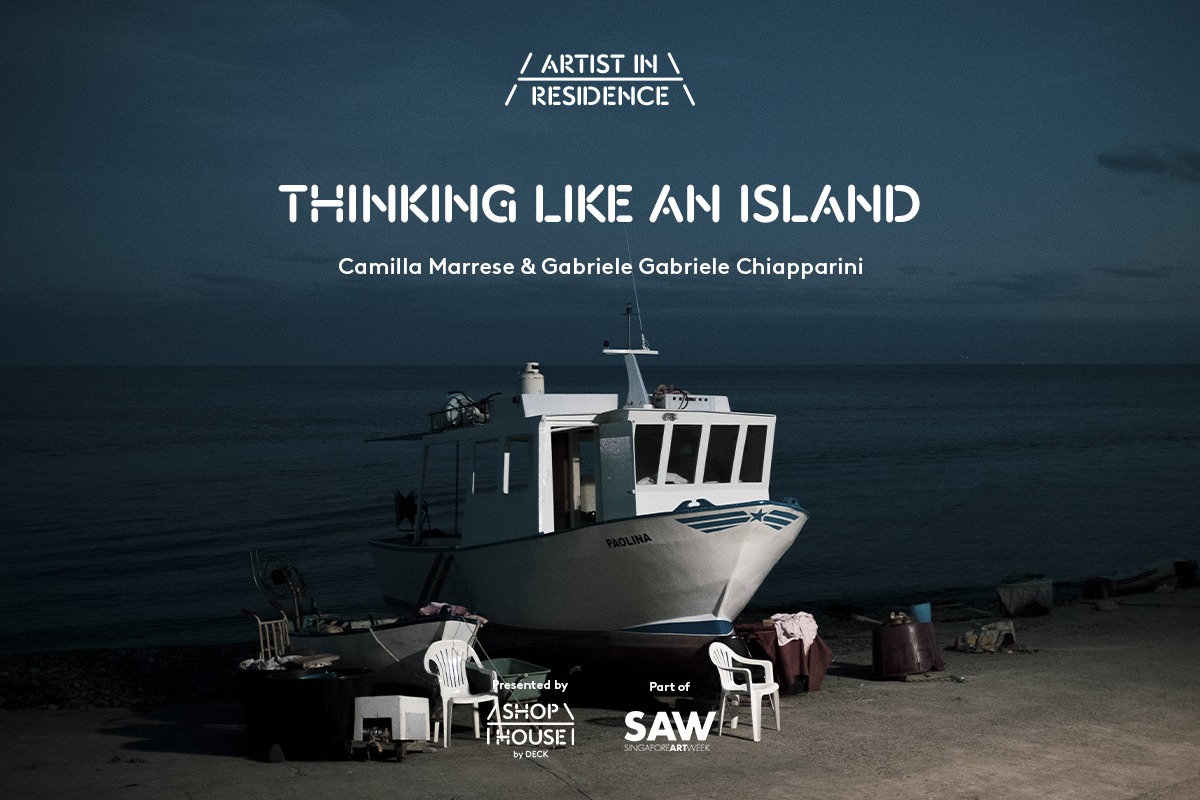
Thinking like an Island by Camilla Marrese and Gabriele Chiapparini
DATE
17 JAN to 28 FEB 2026
VENUE
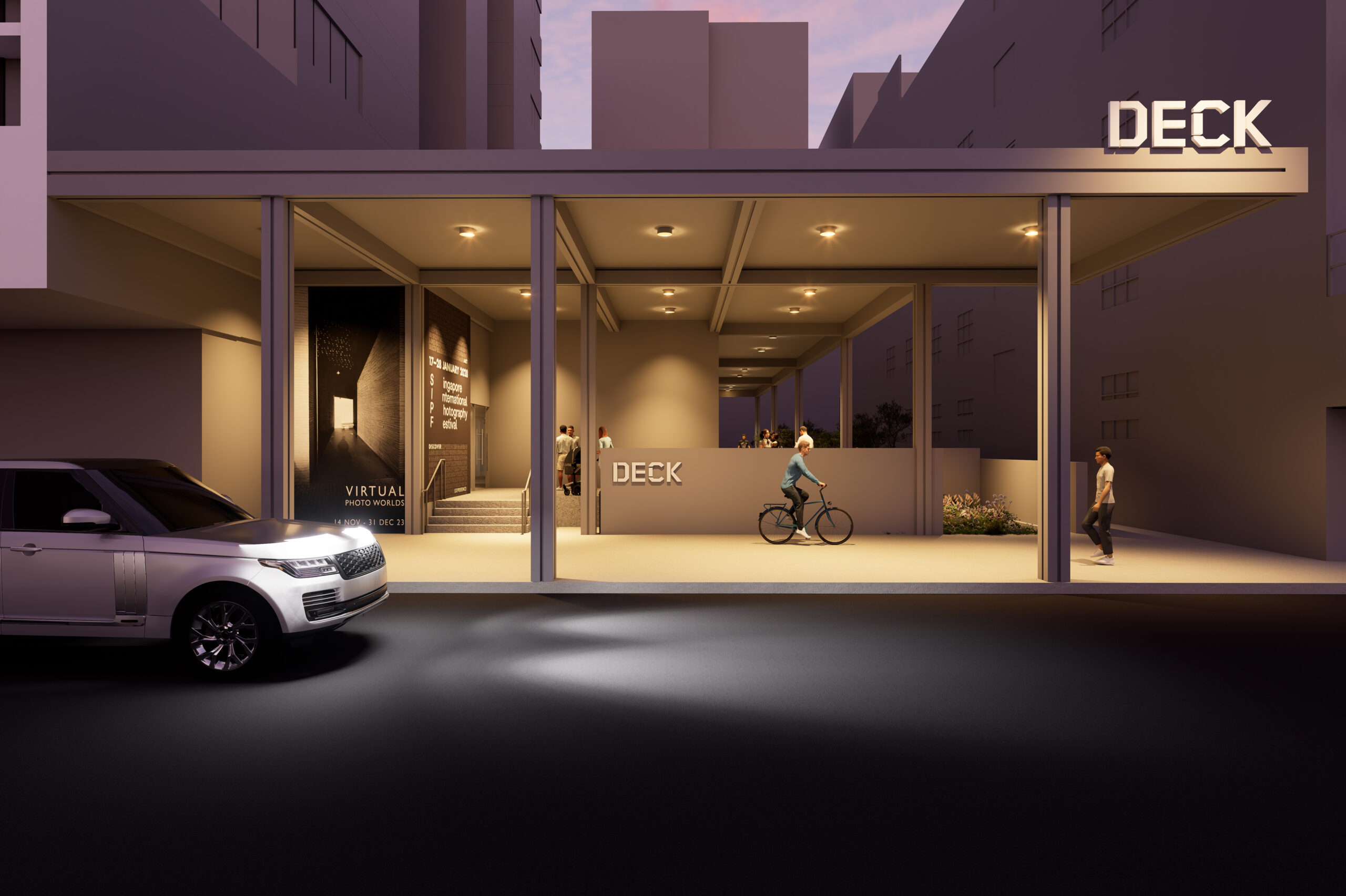
Shop–House by DECK
4 Lorong 24 Geylang, 398616
ADMISSION
Free
About
The Island is distant in the Mediterranean Sea and 675 metres in height. It’s inhabited by an uncertain number of 30 to 60 people year-round, with no hospital, no cars, no priests or police. Some islanders never considered leaving, while others tried, only to return to their lives in the remote bubble. There are untold stories, complex family trees, and historical lore surrounding the community existing on loaves of hallucinogenic-laced bread. Thinking like an Island reflects on a geographical, social, and temporal space, on a system and its moveable logic. Avoiding the typical representation of an island as utopia or dystopia, this work looks at the continuous process of identity construction: clash and coexistence, choice and confinement, innovation and resistance. The experience proves to be stratified, plural, and dense – a vertigo of increasing complexity. As our economic and social systems prove less sustainable, Chiapparini and Marrese ask if the island, where everything is reduced to minimum necessity, could be an idealistic model for surviving the crises that engulf us.
Featuring
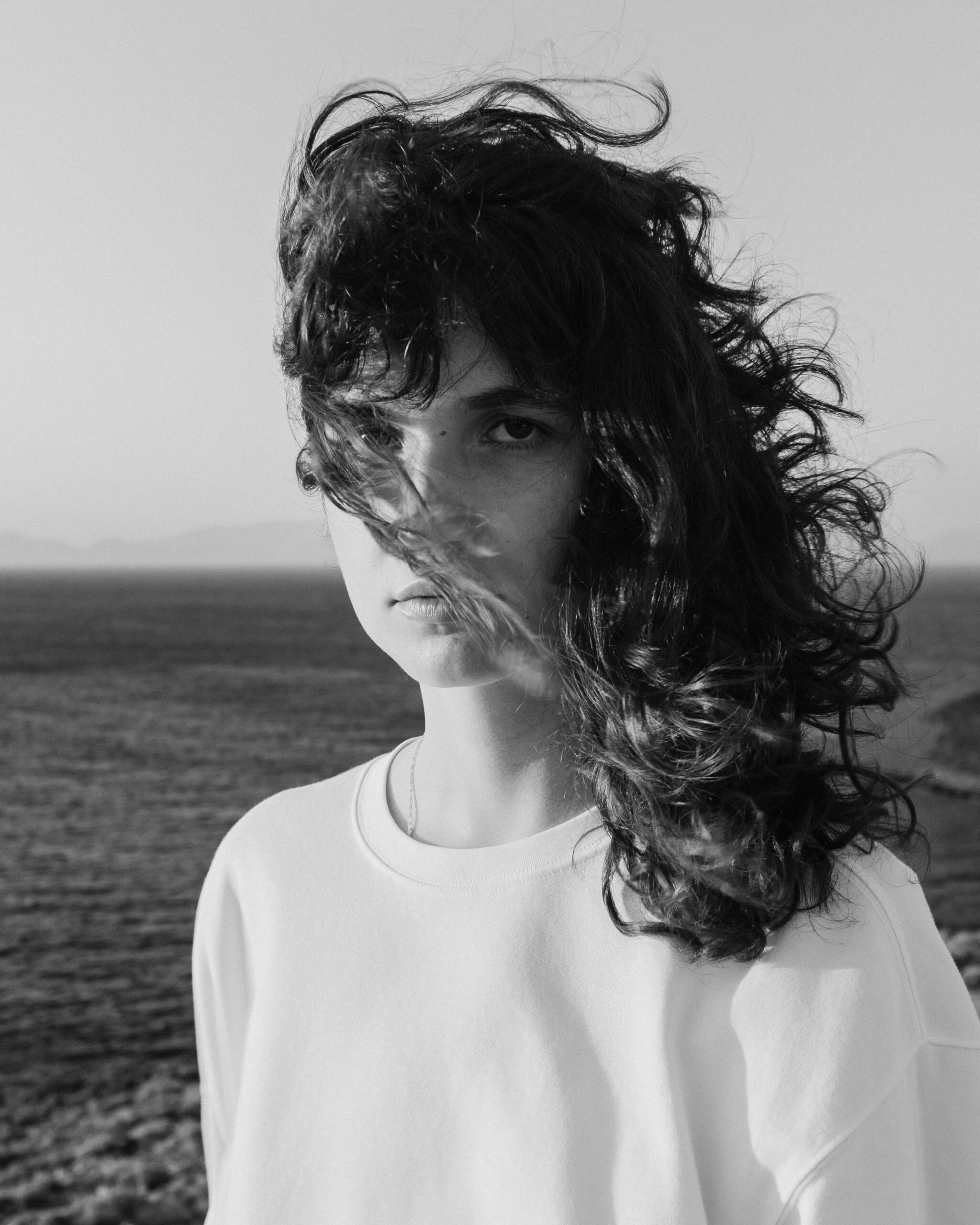
Camilla Marrese
Artist
Camilla Marrese (Bologna, 1998) is a photographer and designer based in Italy, holding a MA in Information Design from Design Academy Eindhoven (NL) and a BA in Graphic Design and Visual Communication from ISIA Urbino (IT). Her artistic practice intersects documentary photography, design and writing, aiming for the expression and visual articulation of complex issues. Her book Thinking like an island, realised in a duo with Gabriele Chiapparini and published by Overlapse in 2024, was a recipient of the Photo Espana Best Photography Book Award in 2025. She was a finalist for the Luigi Ghirri Prize in 2024 and for Project Groundswell in 2025. Her work was exhibited in Verzasca Foto Festival (CH), Dutch Design Week (NL), Fotografia Europea (IT), Espaço Alto (BR), PhMuseum Lab (IT), Spazio MAD (CH), Kranj Foto Fest (SI), Focus Artphilein (CH), Casa Testori (IT). She is PhMuseum’s Visual Editor since 2023, and works as a graphic and book designer since 2021, collaborating with publishing houses and artists.
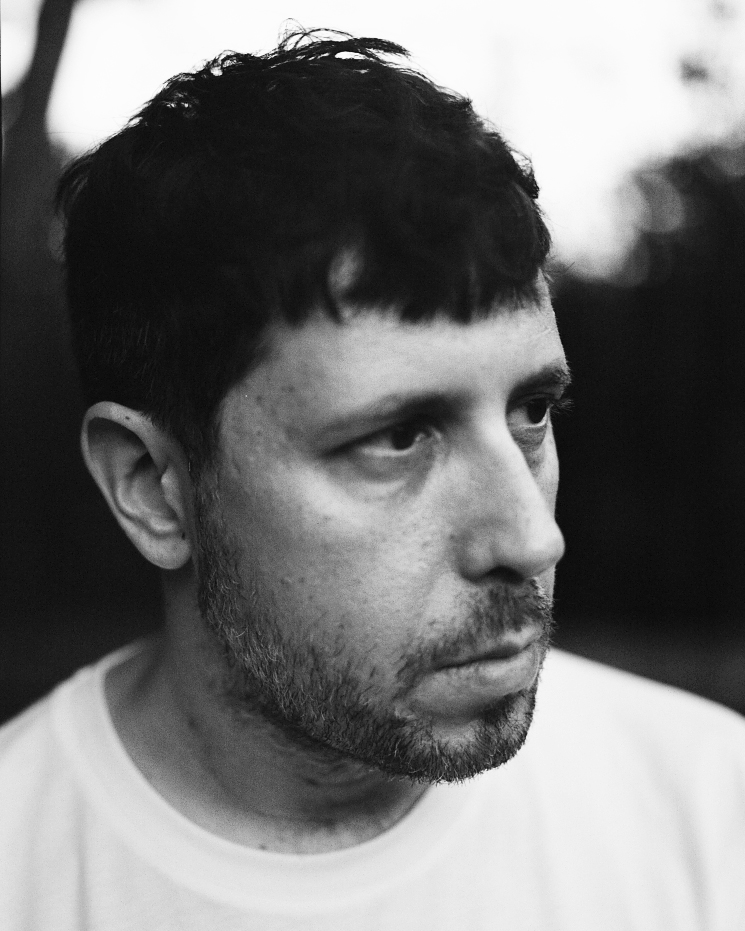
Gabriele Chiapparini
Artist
Gabriele Chiapparini (Bologna, 1980) is a photographer, director and director of photography based in Italy. With a background in sociology, he worked for several years in advertising before focusing on artistic practice and photography publishing. He is the founder and host of Small Photobook Cult, a podcast entirely dedicated to photobooks. Working in a duo with Camilla Marrese, he published Thinking like an island (Overlapse) in 2024, which was a recipient of the Photo Espana Best Photography Book Award in 2025. Their work was a finalist in Project Groundswell in 2025, and exhibited in Verzasca Foto Festival (CH), Espaço Alto (BR), PhMuseum Lab (IT), Spazio MAD (CH), Kranj Foto Fest (SI), Focus Artphilein (CH), Casa Testori (IT).